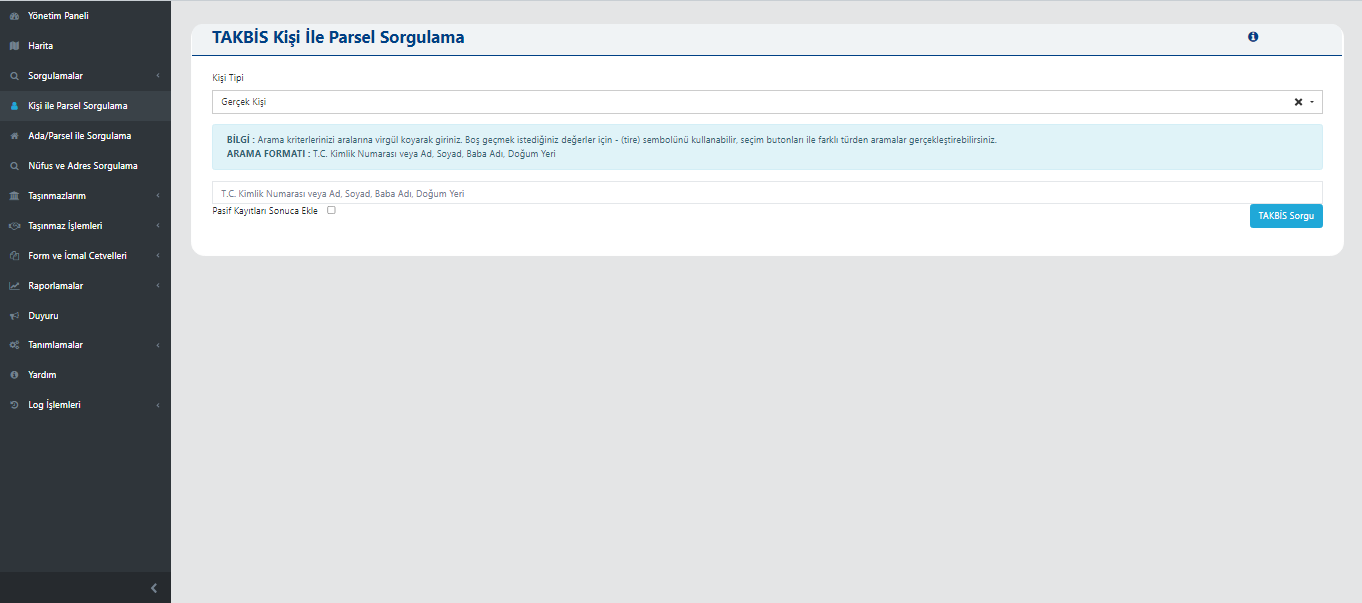
Land Registry and Cadastre Information System Person-Parcel Query
This screen enables querying of the property records of individuals through integration with Land Registry and Cadastre Information System.



Public Property Portal
All your real estate operations on a single platform: sale, purchase, leasing, renting out, unjust occupation fee (ecrimisil), easement right, donation, transfer, allocation, summary schedule, barter, and acquisition through expropriation.
OverviewHow it works
Track acquisition, allocation, revenue and archive records alongside property ownership.
Link property, owner and title records.
Track allocation, easement and usage relationships.
Handle sale, lease and other property transactions.
Maintain traceability through documents and archives.
Overview
Public Property Portal enables public institutions and organizations, municipalities, and infrastructure operators to manage all operations on properties they own (such as allocation, transfer, leasing, sale, easement, donation, and unjust occupation fee) through a single system.
Capabilities
Core Competencies
All your real estate operations on a single platform: sale, purchase, leasing, renting out, unjust occupation fee (ecrimisil), easement right, donation, transfer, allocation, summary schedule, barter, and acquisition through expropriation.
Go to OverviewThis screen enables querying of the property records of individuals through integration with Land Registry and Cadastre Information System.
This screen enables querying of civil registry records and address data based on personal information. The user...
This screen enables the detailed records of title-registered properties to be displayed.
This screen enables the management of all property records related to allocation operations. The user can view records by fields such as property number, province, district, neighborhood, block, and parcel...
This screen shows the list of properties whose allocation process has been completed and whose allocation record has been ended.
This screen is used to view and manage the value update operations of properties.
Capability Cards
The main modules from the documentation were organized into corporate summary cards within the existing page structure.
This screen enables querying of the property records of individuals through integration with Land Registry and Cadastre Information System.
This screen enables querying of civil registry records and address data based on personal information. The user...
This screen enables the detailed records of title-registered properties to be displayed.
The Allocation List area lets you track, control, and manage the related process from a single screen in line with corporate workflows.
The List of Items Removed from Allocation area lets you track, control, and manage the related process from a single screen in line with corporate workflows.
The Value Update List area lets you track, control, and manage the related process from a single screen in line with corporate workflows.
The Public property management in one center area lets you track, control, and manage the related process from a single screen in line with corporate workflows.
The Summary Schedule of Title-Registered Properties area lets you track, control, and manage the related process from a single screen in line with corporate workflows.
Resources
Access presentation and promotional content about Public Property Portal from this area.
Product Tour
This screen enables querying of the property records of individuals through integration with Land Registry and Cadastre Information System.
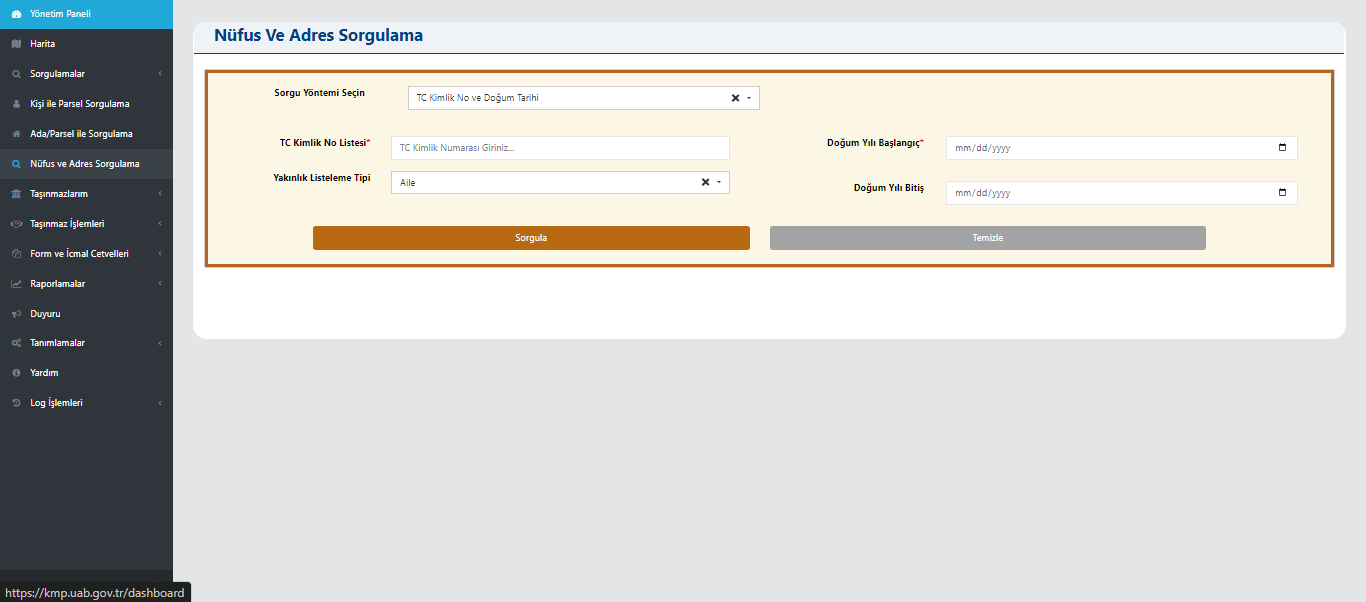
This screen enables querying of civil registry records and address data based on personal information. The user can query by entering information such as Turkish ID number, date of birth, or relationship type.
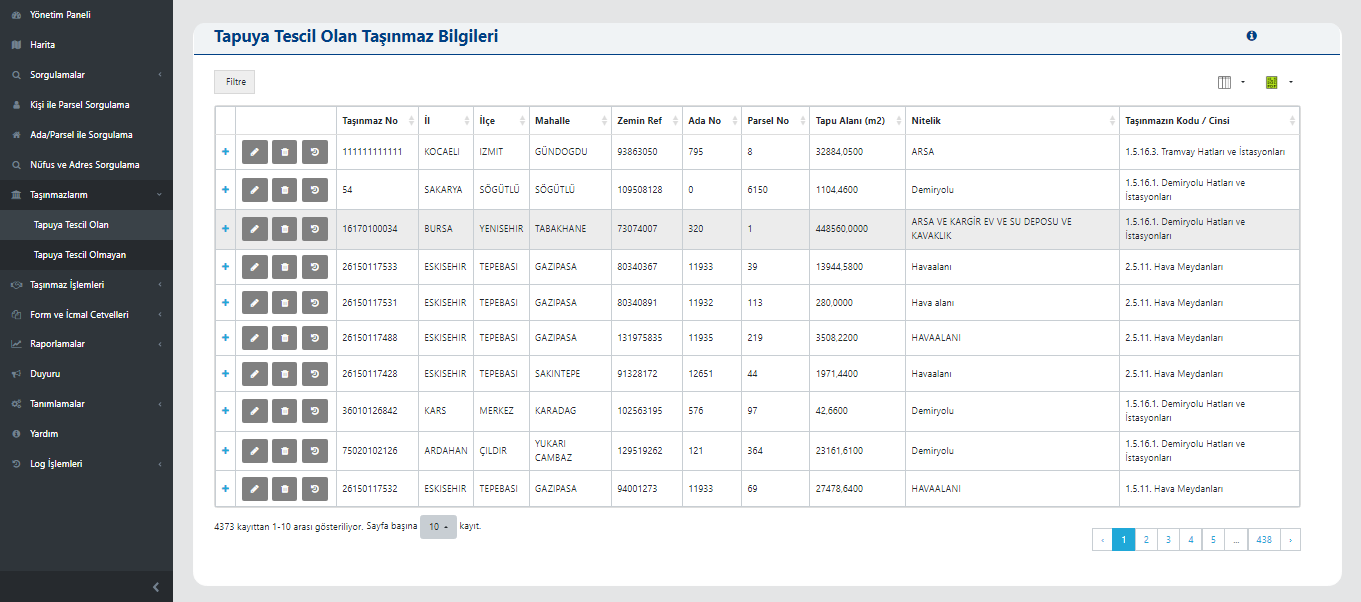
This screen enables the detailed records of title-registered properties to be displayed. The user can examine information such as province, district, neighborhood, block, parcel, title area, attribute, and property code in a table.
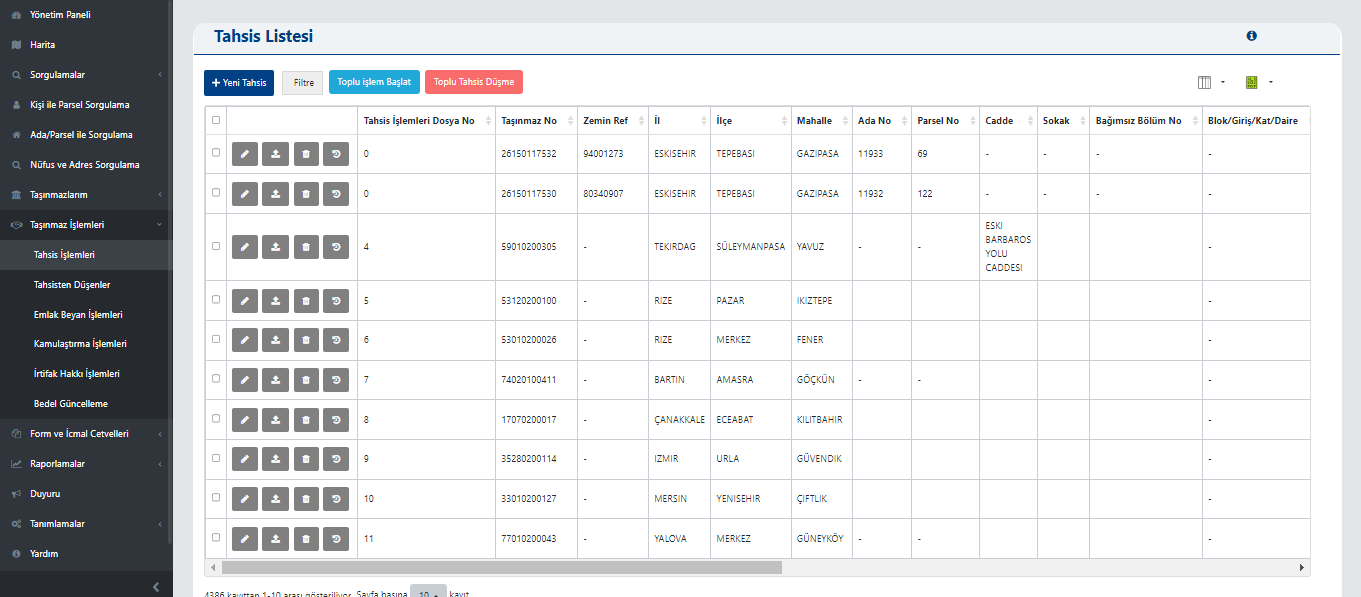
This screen enables the management of all property records related to allocation operations. The user can view and filter records by fields such as property number, province, district, neighborhood, block, and parcel.
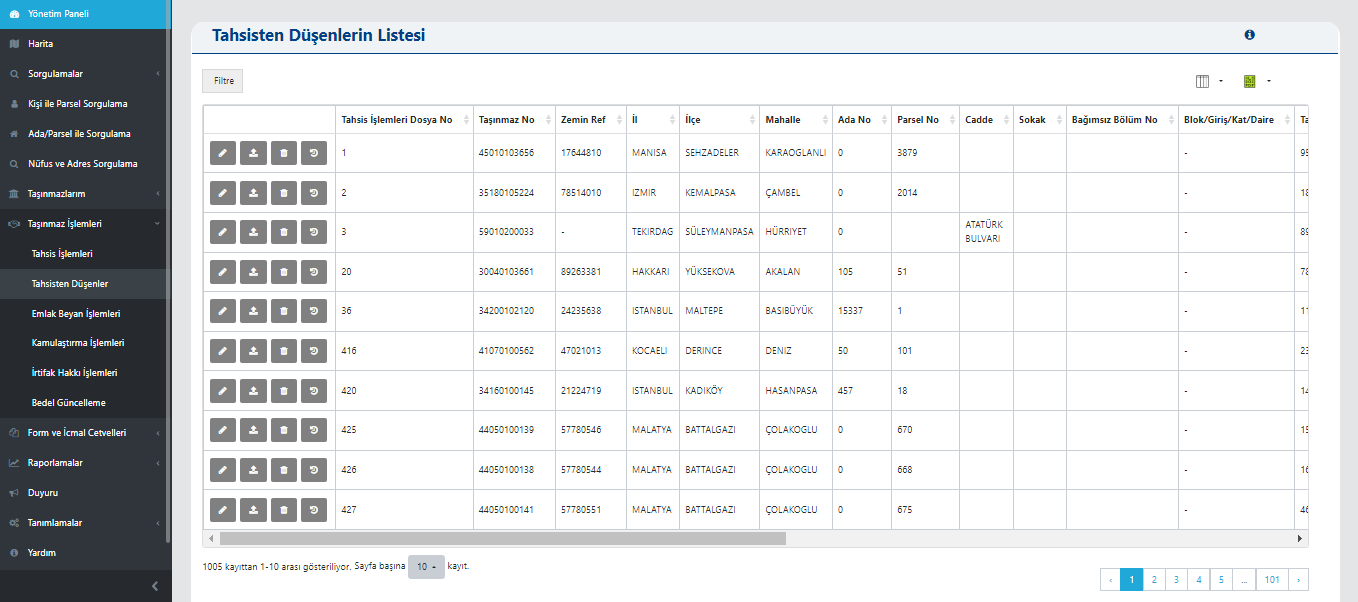
This screen shows the list of properties whose allocation process has been completed and whose allocation record has been ended. The user can view past allocation records by information such as property number, ground reference, province, district, neighborhood, block, and parcel.
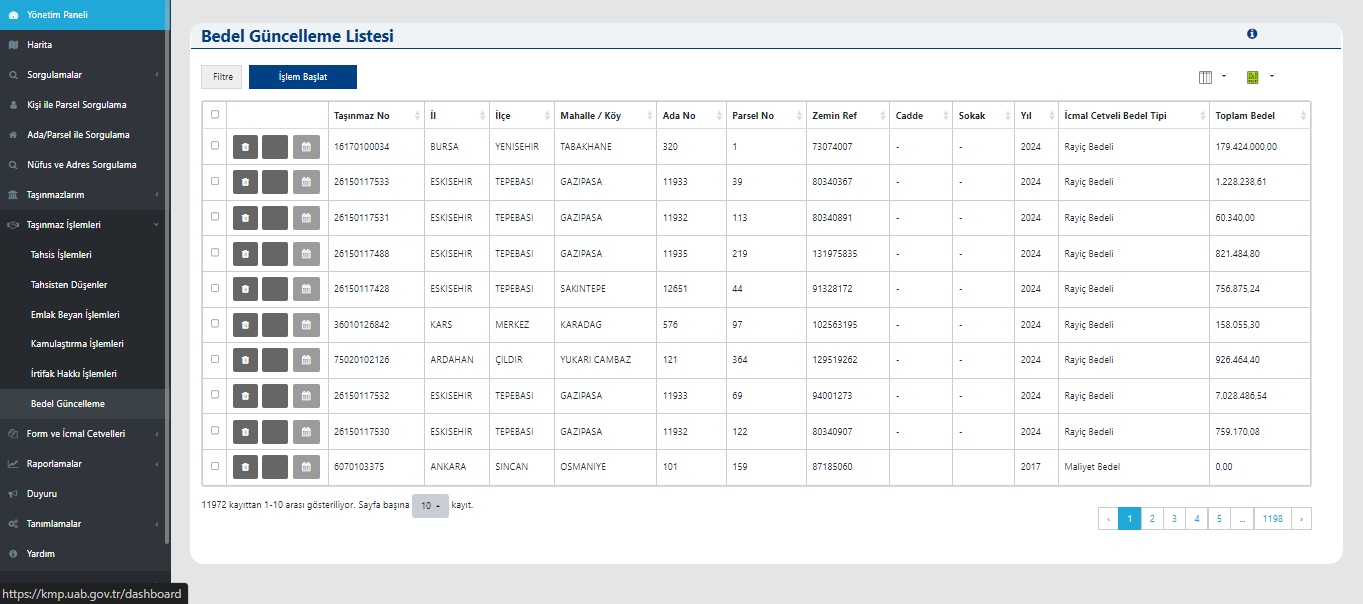
This screen is used to view and manage the value update operations of properties. The user can access the current values of registered properties by information such as property number, province, district, neighborhood, block, parcel, year, and total value.
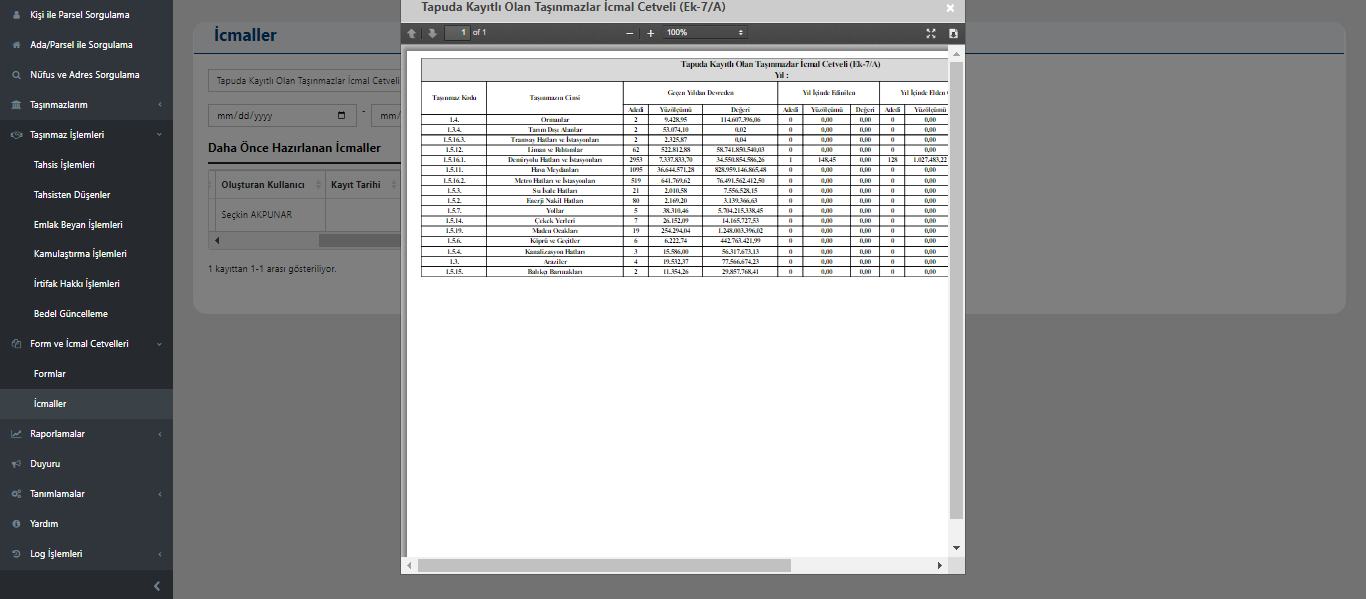
This screen shows the annual summary schedule of all properties owned by the institution. In the prepared schedule, the code, type, quantity, and value of each property are listed on an annual basis.
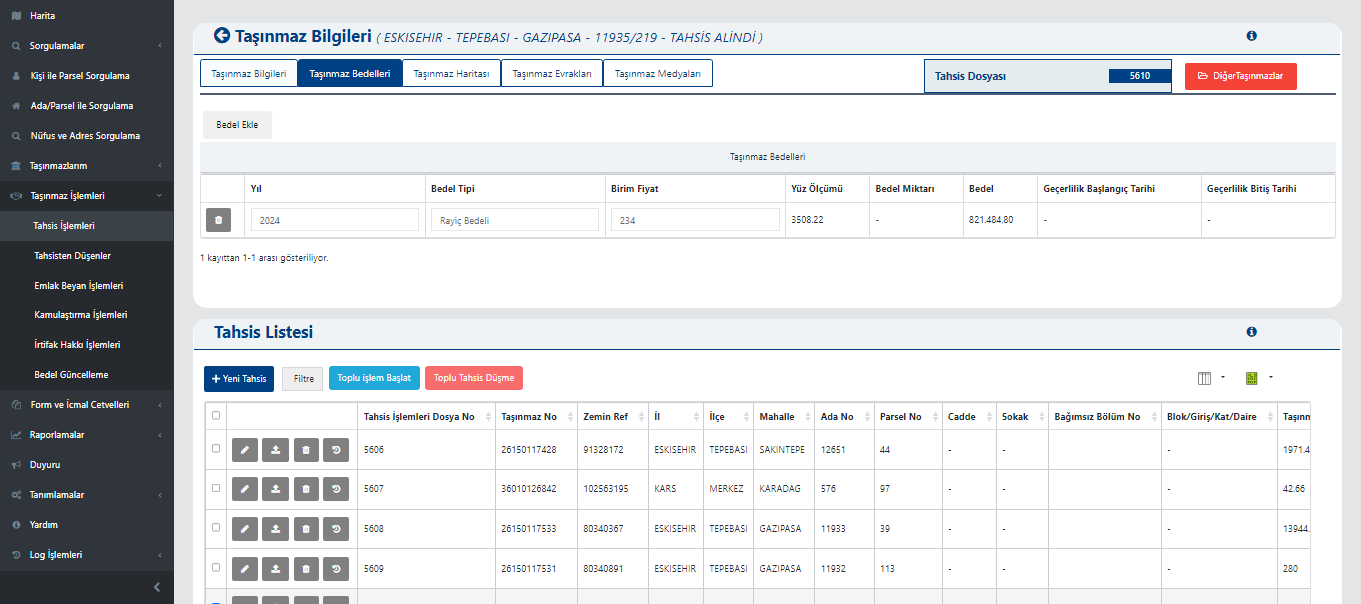
This screen shows the annual value calculations and current allocation records of the selected property together. The upper section displays year, value type, unit price, area, total value, and validity dates.
It enables property data to be displayed on a GIS base together with location and attribute information. Data is managed on the map with layer addition, filtering, and drawing tools.
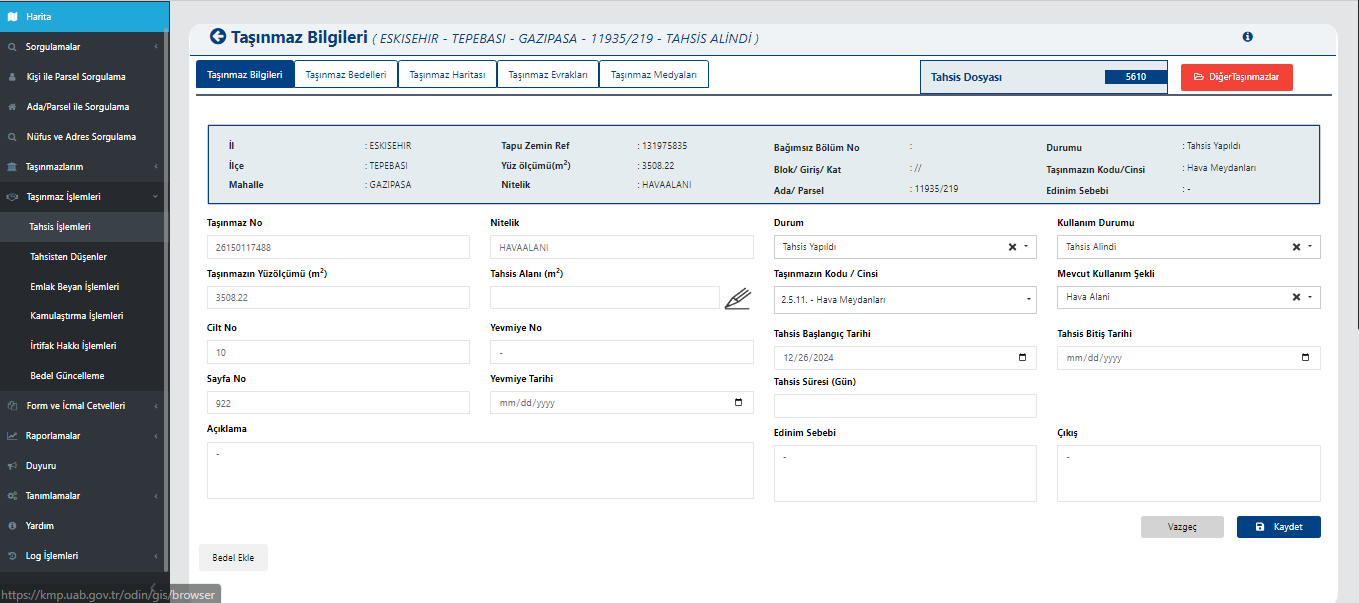
It works with the ability to fully read and write vector data in DGN, DWG, DXF, GML, KML, KMZ, NCZ, TAB, and SHP formats.
All ownership, transfer, allocation, easement, leasing, and sale processes for properties can be reported through the system.
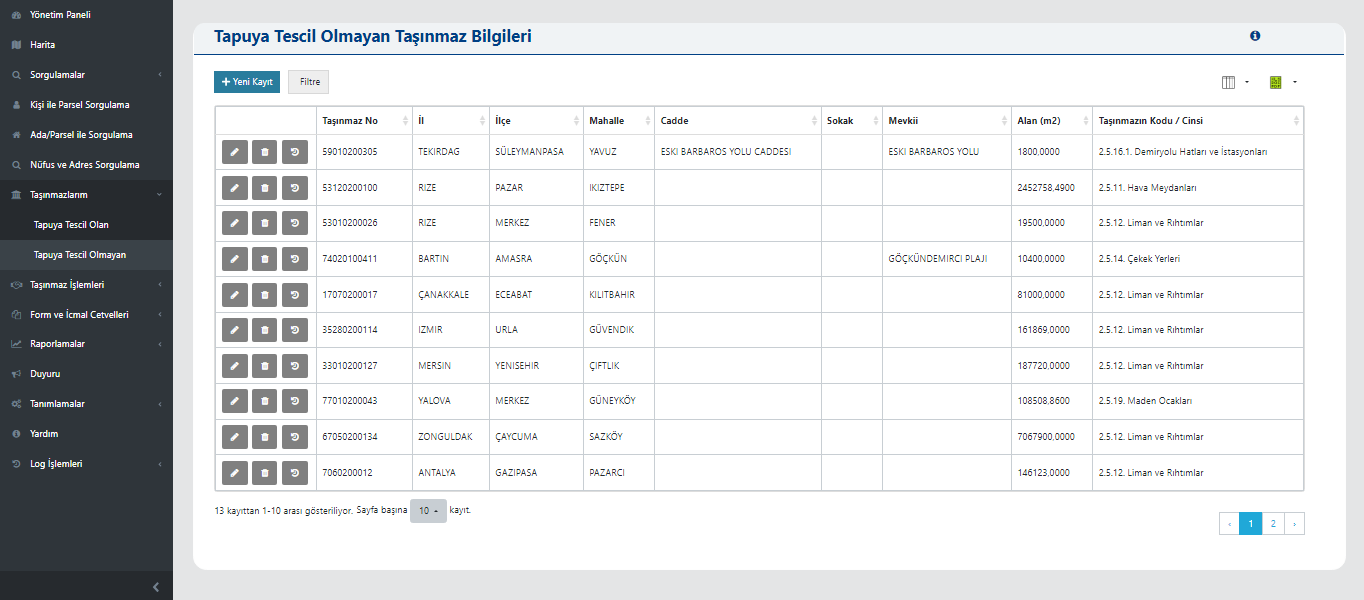
It works integrated with Land Registry and Cadastre Information System, Central Civil Registration System, Tax Office Automation Project, and e-Government automations; data sharing and verification operations are carried out through these systems.
FAQ
The product's core use cases and corporate contribution are summarized here.
Get in TouchPublic Property Portal
Public Property Portal enables public institutions and organizations, municipalities, and infrastructure operators to manage all operations on properties they own (such as allocation, transfer, leasing, sale, easement, donation, and unjust occupation fee) through a single system.